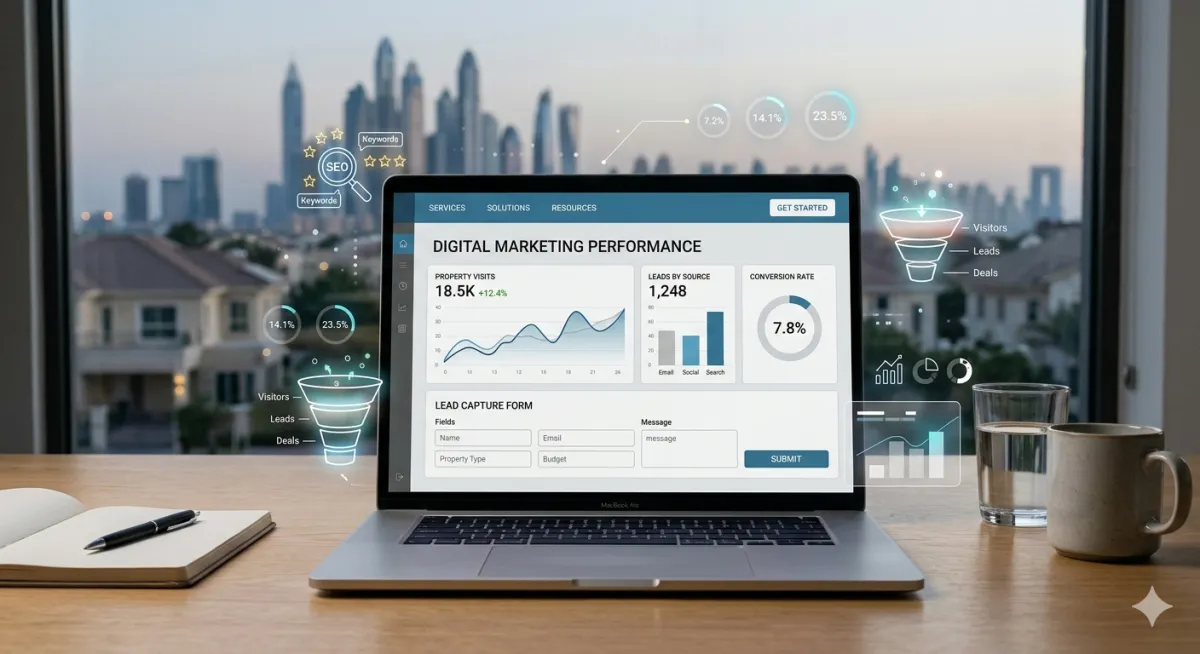
Does Your Real Estate Website Really Need IDX Integration in Today’s Real Estate Digital Market?
Introduction
The real estate digital market in 2026 has completely reshaped how agents generate leads, and it’s forcing a major question: does your website really need IDX integration to succeed?
For years, IDX has been considered a must-have feature for real estate websites. Many agents believed that without MLS listings on their site, they were at a disadvantage.
But in today’s real estate digital market, the real question isn’t whether you have IDX—it’s whether your website is actually generating qualified leads.
From a modern digital marketing perspective, IDX is no longer the deciding factor it once was. In many cases, it’s optional—and sometimes even a distraction from strategies that produce real results.
Why IDX Became Popular (and Why That’s Changed)
IDX feeds gained popularity because they provided a simple way to display MLS listings directly on an agent’s website.
At the time, it made sense:
Visitors could search for homes easily
Agents could compete with major listing platforms
Listings updated automatically
However, the real estate digital market has evolved significantly.
Today’s buyers and sellers:
Start their search on Google, YouTube, and social media
Choose agents based on trust, authority, and visibility
Expect fast, personalized digital experiences
Simply embedding IDX no longer meets these expectations.
The Real Cost of a “Great” IDX Experience
When people think of a great property search experience, they’re often thinking of platforms like Zillow or Realtor.com.
But here’s the reality:
Those companies invest millions into:
Engineering and development
User experience (UX) design
Data infrastructure
Continuous optimization
Most agents cannot replicate this.
Instead, typical IDX setups result in:
Templated, generic pages
Slow-loading property searches
Designs that look identical across thousands of sites
In the real estate digital market, this creates a major issue—your website fails to stand out.
IDX Alone Doesn’t Drive SEO or Traffic
One of the biggest myths in the real estate digital market is that IDX improves SEO.
In reality, most IDX integrations:
Operate on subdomains
Contain duplicated or low-value content
Compete with high-authority platforms
Search engines prioritize:
Original, high-quality content
Local expertise
Authority signals
User engagement
IDX alone doesn’t provide these, which is why most agent websites struggle to rank.
Where Real Estate Websites Actually Win Today
In today’s real estate digital market, successful websites focus on conversion—not just features.
Your website should:
Capture leads
Build trust
Support your marketing campaigns
Position you as the local expert
This is achieved through:
High-converting landing pages
Local market insights and blog content
Neighborhood guides
Buyer and seller resources
CRM and automation integration
These strategies consistently outperform generic IDX pages in both conversions and ROI.
When IDX Does Make Sense
IDX still has a place—but only when used strategically within the real estate digital market.
It may make sense if:
You’re a high-volume team or brokerage
You invest in custom IDX solutions
It supports a broader SEO strategy
It integrates with CRM and automation tools
However, many agents will see better results by investing in:
Google Ads and paid search
SEO-driven content
Social media funnels
Email and SMS automation
Retargeting strategies
The Digital Marketing Truth in 2026
In the modern real estate digital market, visibility beats features.
Buyers and sellers choose agents because:
They found them on Google
They saw their videos or ads
They consumed their content
They trust their expertise
IDX doesn’t create demand.
Digital marketing does.
Final Takeaway: Strategy First, Tools Second
Before adding IDX to your website, ask:
Is my site converting visitors into leads?
Is it supporting my SEO and ad strategy?
Is it building trust and authority?
If not, IDX won’t fix the problem.
In the real estate digital market, success isn’t about having more features—it’s about having the right strategy.
The agents who win in 2026 are those who focus on visibility, trust, and conversion—not just functionality.